

How AI Agents Will Transform Workflows and Business Operations in 2026
Artificial intelligence agents are reshaping how businesses operate by automating workflows that once required human intervention. In 2026, AI agents will no longer be just tools but active participants in daily business processes. This shift will bring faster decision-making, reduced errors, and new opportunities for growth.
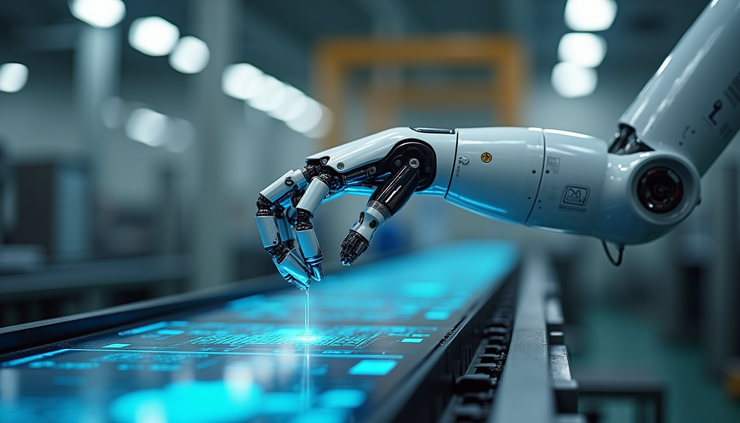
What Are AI Agents and How Do They Work?
AI agents are software programs or systems designed to perform tasks autonomously by perceiving their environment, processing data, and making decisions. Unlike traditional automation, which follows fixed rules, AI agents learn from data and adapt to changing conditions.
These agents use techniques such as:
Machine learning to improve performance over time
Natural language processing to understand and respond to human input
Computer vision to interpret visual information
Autonomous decision-making to handle complex workflows without human oversight
By integrating these capabilities, AI agents can manage entire workflows, from data collection to execution and reporting.
The Shift from Traditional Workflows to AI-Driven Automation
Traditional workflows often involve repetitive manual tasks, multiple handoffs, and delays caused by human error or limited availability. AI agents replace these workflows by:
Automating routine tasks such as data entry, scheduling, and monitoring
Coordinating between different systems and departments without manual intervention
Detecting anomalies and triggering corrective actions immediately
Providing real-time insights to support faster decisions
For example, in supply chain management, AI agents can track inventory levels, predict demand, and automatically reorder stock, reducing shortages and excess inventory.
Key Benefits of AI Agents in Business Operations
Businesses adopting AI agents for workflow automation experience several advantages:
Increased Efficiency
AI agents operate 24/7 without fatigue, handling tasks faster than humans. This leads to shorter cycle times and higher throughput.
Improved Accuracy
By reducing human involvement in repetitive tasks, AI agents minimize errors caused by oversight or fatigue.
Cost Savings
Automating workflows reduces labor costs and lowers expenses related to errors and delays.
Enhanced Scalability
AI agents can easily scale operations up or down based on demand without the need to hire or lay off staff.
Better Decision-Making
AI agents analyze large volumes of data quickly, providing actionable insights that help managers make informed decisions.
Real-World Examples of AI Agents Transforming Workflows
Customer Support Automation
AI chatbots and virtual assistants handle common customer inquiries, freeing human agents to focus on complex issues. These AI agents learn from interactions to improve responses over time.
Financial Services
AI agents monitor transactions in real-time to detect fraud, automate compliance checks, and manage risk assessment workflows.
Manufacturing
Robotic process automation combined with AI agents controls production lines, schedules maintenance, and optimizes resource allocation.
Healthcare
AI agents assist in patient scheduling, medical record management, and even preliminary diagnosis based on symptom analysis.
Challenges and Considerations When Implementing AI Agents
While AI agents offer many benefits, businesses must address several challenges:
Data Quality: AI agents rely on accurate and comprehensive data to function effectively.
Integration: Seamless connection with existing systems is essential for smooth workflow automation.
Security: Protecting sensitive data from breaches is critical when deploying AI agents.
Change Management: Employees need training and support to work alongside AI agents.
Ethical Use: Ensuring AI decisions are transparent and fair is important to maintain trust.
Planning and ongoing evaluation help overcome these challenges and maximize the value of AI agents.
What to Expect in 2026 and Beyond
By 2026, AI agents will become more autonomous and capable of handling complex workflows with minimal human input. Advances in AI will enable agents to:
Collaborate with humans more naturally using conversational interfaces
Anticipate needs and proactively suggest actions
Adapt workflows dynamically based on real-time data
Support personalized customer experiences at scale
Businesses that adopt AI agents early will gain a competitive edge through faster innovation and more agile operations.
At Zuntra, we explore the future of technology, AI, digital ecosystems, software innovation, and modern business trends. Whether you're a creator, startup founder, marketer, or tech enthusiast, our insights are designed to help you stay ahead in a rapidly evolving digital world. Follow Zuntra for the latest industry updates, actionable strategies, and future-focused content that drives growth, innovation, and smarter digital experiences.


Comments